
Introduction
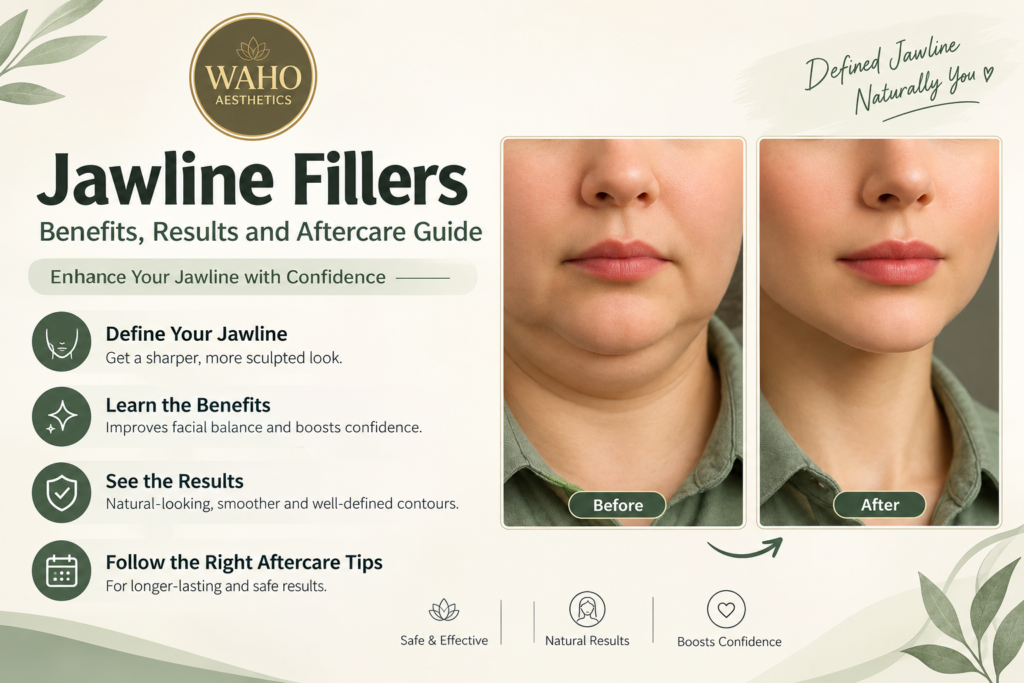
A well-shaped jawline can make your face look more balanced. However, some people have a less defined jawline because of their natural face shape, ageing, or less volume in certain areas. Jawline fillers can help improve the shape of your jaw without surgery.
Jawline fillers are injections that add volume and make your jawline look more defined. A trained professional chooses the right areas for treatment based on your face shape and needs.
At WAH Aesthetics, you can learn more about jawline fillers before making a decision. In this blog, we will explain the benefits of jawline fillers, the results you can expect, and how to care for your skin after treatment.
What Are Jawline Fillers?
Jawline fillers are injections that help improve the shape of your jaw. They add volume to certain areas and make your jawline look more defined. A qualified medical professional chooses the right areas for treatment based on your face shape and needs.
Most jawline fillers use hyaluronic acid (HA). This substance naturally exists in the body and helps the skin hold moisture. However, the type of filler depends on your needs and the treatment plan.
Unlike jaw surgery, jawline fillers do not need cuts or stitches. Therefore, they offer a non-surgical way to improve your jawline.
However, jawline fillers do not change your bone structure permanently. Instead, they add volume and provide temporary results. The final results depend on your face shape, the type of filler, and the professional’s skills.
What Are the Benefits of Jawline Fillers?
Jawline fillers can help improve the shape and definition of your jaw. They offer several benefits for people who want a more defined jawline. However, the results may differ from person to person.
1. Improve Jawline Definition
One of the main benefits of jawline fillers is that they make your jawline look more defined. The filler adds volume to certain areas and helps create a clearer shape between your jaw and neck.
Additionally, a trained professional places the filler according to your natural face shape. This helps create a balanced and natural look without making your jawline look too sharp.
2. Enhance Facial Proportions
Your jawline is an important part of your face shape. A more defined jawline can help your face look more balanced from different angles.
For example, some people want a sharper jawline, while others prefer a natural look. A trained professional can create a treatment plan based on your face shape and personal needs.
3. Provide a Non-Surgical Option
Jawline fillers are a good option for people who want to improve their jawline without surgery. They provide temporary results and do not require surgical cuts.
Most people can return to their daily activities soon after the treatment. However, they may notice some swelling, pain, or bruising for a few days.
Jawline fillers cannot make major changes to your bone structure. Therefore, people who need bigger changes may need to consider surgery.
4. Offer Customisable Results
Everyone has a different face shape. Therefore, a trained professional checks your jawline, chin, and skin before suggesting treatment.
Some people want a small change, while others may need a different treatment. A personalised treatment plan helps create results that match your face shape and needs.
5. Deliver Temporary Results
Jawline fillers made with hyaluronic acid can last around 12–18 months. However, the results may last for a shorter or longer time depending on the type of filler used.
The results depend on the amount of filler, the treatment area, and your body. Over time, your body slowly breaks down the filler.
Since the results are temporary, you can review your appearance and talk to your treatment provider if you want another session.
How Does Jawline Filler Treatment Work?
Understanding the treatment process can help you prepare for your appointment.
Step 1: Consultation
First, a qualified medical professional talks with you about your concerns and the results you want. They also ask about your medical history, allergies, and current medicines.
Next, they check your face shape and jawline to see if jawline fillers are right for you. If this treatment is not suitable for you, they may suggest another option.
Step 2: Treatment Planning
Next, the professional decides which areas of your jawline need filler. They also choose the right filler and amount based on your face shape and needs.
However, using more filler does not always give better results. Using the right amount can help your jawline look natural and balanced.
Step 3: Filler Injection
During the treatment, the professional cleans your skin and injects the filler into selected areas of your jawline. The procedure usually takes around 30–60 minutes, depending on the treatment.
The professional may apply a numbing cream to reduce discomfort. However, you may still feel some pressure, pain, or slight discomfort during the injections.
Step 4: Initial Assessment
After the injections, the professional checks your jawline and explains how to care for the treated area.
You may notice some changes immediately. However, swelling can affect how your jawline looks at first. Therefore, wait for the swelling to go down before checking your final results.
What Results Can You Expect From Jawline Fillers?
Jawline fillers can make your lower face look more defined by adding volume to certain areas. However, the results depend on your natural face shape and the changes you want.
Some people notice changes immediately after the treatment. However, swelling and bruising may affect how the jawline looks at first.
Over the next few days, the swelling and bruising usually start to improve. Your provider may also suggest a follow-up visit to check your results and see if you need any further care.
The results depend on several factors:
- Type and amount of filler: Different fillers can give different results.
- Face shape: Your natural jawline and chin affect the final look.
- Professional’s skills: The provider’s experience and technique play an important role.
- Body response: Everyone’s body reacts differently to fillers.
- Aftercare: Following the right aftercare instructions can help you recover well.
However, jawline fillers cannot remove extra fat, tighten very loose skin, or change your bone structure. Therefore, a trained professional can help you understand whether this treatment is right for your needs.
Jawline Filler Aftercare: Tips for Better Recovery
Proper aftercare helps your skin heal and supports a smooth recovery after jawline fillers. It also helps you notice any possible problems early. Therefore, always follow your professional’s aftercare instructions.
1. Avoid Touching or Pressing the Area
After the treatment, avoid touching, rubbing, or massaging the treated area. Also, do not try to change the shape of the filler yourself.
Your provider may give you specific instructions about using face products, shaving, and other activities. Follow these instructions to care for your jawline properly.
2. Apply a Cold Compress Carefully
A clean, cool cloth can help reduce mild swelling and discomfort after jawline fillers. Apply it gently to the treated area.
However, never put ice directly on your skin or press too hard on the treated area.
3. Avoid Strenuous Exercise Temporarily
Your provider may ask you to avoid heavy exercise for 24–48 hours after jawline fillers. This can help reduce swelling and bruising.
Also, follow your provider’s advice about activities that make your body hot or increase blood flow, especially if you have swelling.
4. Limit Alcohol and Follow Medication Advice
Alcohol may increase the risk of bruising after jawline fillers. Therefore, your provider may ask you to avoid alcohol before and after the treatment.
Also, do not stop taking prescribed medicines or change their doses without medical advice. Before your appointment, tell your provider about any medicines or supplements you take, as some may increase the risk of bleeding or bruising.
5. Protect Your Skin
Keep the treated area clean and follow your provider’s skincare instructions. Also, protect your skin from the sun and avoid strong skincare products if your provider recommends it.
6. Be Patient With the Results
You may notice mild swelling, redness, bruising, or pain after jawline fillers. These effects usually improve within a few days, but recovery time can vary from person to person.
Therefore, do not judge your final results immediately after treatment. Contact your provider if your symptoms get worse, last longer than expected, or cause concern.
7. Attend Follow-Up Appointments
A follow-up appointment helps your provider check your recovery and results. They can also answer your questions and decide if you need any further treatment.
However, do not get more filler injections until your provider has checked your results and confirmed that additional treatment is suitable.
What Are the Possible Risks of Jawline Fillers?
Jawline fillers can improve your jawline, but the treatment also has some risks. Therefore, it is important to understand the possible side effects before getting the treatment.
Common side effects include:
- Swelling around the injection area.
- Bruising or redness.
- Mild pain or discomfort.
- Small lumps or uneven skin.
- Mild itching or skin sensitivity.
Sometimes, people may also develop an infection, long-lasting lumps, skin reactions, or changes in skin colour.
In rare cases, filler can block a blood vessel. This can damage the skin and may even cause vision problems.
Seek urgent medical help if you experience severe pain, unusual skin colour changes, cold skin around the injection area, or any vision problems. Do not wait for your next appointment if you notice these symptoms.
To reduce the risk of complications, choose a qualified and trained medical professional who understands facial anatomy. Also, tell them about your medical history, allergies, previous filler treatments, and expectations before starting the treatment.
Who Is a Suitable Candidate for Jawline Fillers?
Jawline fillers may be suitable for adults who want a more defined jawline and understand that the results are temporary.
You may be a good candidate if you:
- Want to improve the shape of your jawline.
- Prefer a treatment that does not require surgery.
- Have realistic expectations about the results.
- Can follow the aftercare instructions.
- Do not have any health conditions that make the treatment unsafe.
However, jawline fillers are not suitable for everyone. Your provider should check your skin, allergies, medical history, and other health conditions before recommending treatment. They should also discuss whether pregnancy or breastfeeding affects your treatment options.
Additionally, fillers may not be the best choice if you want to remove extra fat, tighten loose skin, or make major changes to your bone structure.
A consultation with WAH Aesthetics can help you learn more about jawline fillers and understand what to consider before choosing a treatment.
Jawline Fillers vs. Jawline Surgery
Jawline fillers and jawline surgery can both change the shape of your lower face. However, they work in different ways.
Jawline fillers add volume to certain areas and help make your jawline look more defined without surgery. The results are temporary, so you may need more treatments to maintain them.
On the other hand, jawline surgery can make bigger changes to your facial structure. Depending on the procedure, the results may last much longer.
Jawline fillers usually require less recovery time than surgery. However, they cannot make the same structural changes as surgery.
Therefore, the right treatment depends on your face shape, needs, and desired results. A qualified medical professional can explain the benefits, risks, costs, and limitations of both options to help you make an informed decision.
Conclusion
Jawline fillers can help make your jawline look sharper and your face look more balanced without surgery. However, the results are temporary and may be different for each person.
The treatment can also cause some side effects. Therefore, always choose a qualified professional and follow the aftercare instructions.
If you are thinking about getting jawline fillers, visit WAH Aesthetics to learn more about the treatment. Talk to a qualified professional to understand the benefits, risks, and whether this treatment is right for you.
How long do jawline fillers last?
Jawline fillers can last around 12–18 months, depending on the type of filler used. However, the results may last for a shorter or longer time based on the amount of filler, your body, and the treatment area.
Are jawline fillers painful?
You may feel some pain, pressure, or a slight sting during jawline filler injections. However, a qualified professional may use a numbing cream or another suitable method to make the treatment more comfortable.
How long does it take to recover from jawline fillers?
Most people can return to their daily activities soon after jawline filler treatment. However, swelling, pain, and bruising may last for a few days. Therefore, follow your provider’s instructions and give your skin enough time to heal.
Can jawline fillers give permanent results?
No, jawline fillers do not provide permanent results. Most hyaluronic acid fillers slowly break down in the body over time. Therefore, you may need another treatment if you want to maintain your jawline’s shape.
Do jawline fillers make the face look slimmer?
Jawline fillers can make your jawline look more defined and your face more sculpted. However, they add volume instead of removing fat. Therefore, they may not make everyone’s face look slimmer.