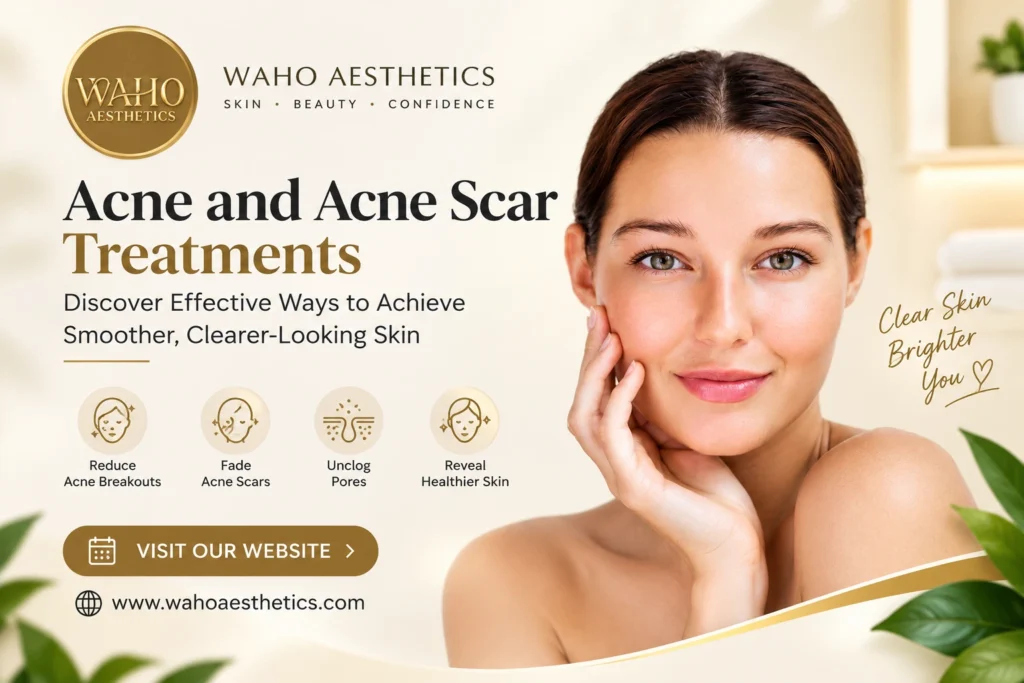
Acne and Acne Scar Treatments can affect your skin and confidence. Pimples, blackheads, and whiteheads can appear at any age. Sometimes, acne also leaves dark spots, uneven skin, and scars.
Fortunately, different treatments can help reduce acne and improve the look of acne scars. However, the right treatment depends on your skin type, the severity of your acne, and the type of scars you have.
At WAH Aesthetics, you can learn about different skincare treatments and ways to care for your skin. However, always consult a qualified skincare professional before choosing a treatment.
In this blog, we will explain the best treatments for acne and acne scars. We will also share simple skincare tips to help you keep your skin healthy.
What are the Causes of Acne and Acne Scar Treatments?
Acne and Acne Scar Treatments develops when oil, dead skin cells, and bacteria block the pores in your skin. Hormonal changes can also increase oil production and cause pimples.
Several factors can cause acne:
- Hormonal changes: Changes during puberty or menstrual cycles can cause acne.
- Excess oil: Too much oil can block your pores and lead to pimples.
- Blocked pores: Dead skin cells and oil can collect in your pores.
- Family history: You may be more likely to develop acne if your family members have it.
- Skincare products: Some heavy skincare products can block your pores and cause breakouts.
Acne scars can develop when deep pimples damage your skin. These scars may leave small holes or raised areas on your skin. However, acne can also leave flat red, brown, or dark marks. These marks usually affect your skin colour rather than its texture.
Therefore, you should understand the type of acne or marks you have before choosing a treatment. A skincare professional can help you find the right option.
1. Topical Treatments for Mild to Moderate Acne
Topical treatments are creams, gels, or lotions that you apply directly to your skin. These products help reduce pimples, calm skin redness, and prevent new breakouts.
Common topical treatments include:
Salicylic Acid
Salicylic acid helps remove dead skin cells and unclog pores. As a result, it can reduce blackheads, whiteheads, and mild acne.
However, using too much salicylic acid can make your skin dry or irritated. Therefore, choose a suitable product and follow the instructions before using it.
Benzoyl Peroxide
Benzoyl peroxide helps kill acne-causing bacteria and reduce swollen pimples. It can help treat red and inflamed acne.
However, it may make your skin dry or irritated. It can also leave bleach marks on towels, clothes, and pillowcases.
Retinoids
Topical retinoids, such as adapalene, help keep pores clear and prevent new pimples. They may also improve uneven skin over time.
However, retinoids can cause dryness and irritation, especially on sensitive skin. If you are pregnant or planning to become pregnant, talk to a doctor before using retinoids.
If your acne does not improve or becomes worse, consult a dermatologist for the right treatment.
2. Chemical Peels for Acne and Acne Marks
Chemical peels use special acids to remove dead skin cells from the surface of your skin. They can help clear blocked pores, reduce mild acne, and improve dark spots left by pimples.
For example, salicylic acid peels can help people with oily skin and acne. Other chemical peels may help improve uneven skin tone and make the skin look smoother.
However, chemical peels cannot remove every type of acne scar, especially deep scars. You should always choose a trained professional for this treatment.
A skincare professional can select the right chemical peel based on your skin type and condition. This is especially important for darker skin because the wrong peel can cause burns or make dark spots worse.
3. Microneedling for Acne and Acne Scar Treatments
Microneedling is a skin treatment that uses tiny needles to make small, controlled injuries in the skin. This process helps your body produce collagen, which supports skin repair.
As a result, microneedling can help reduce the appearance of some acne scars and improve uneven skin texture.
However, results take time because your skin needs time to heal and produce new collagen. You may need several sessions, depending on the depth of your scars.
Before treatment, a skincare professional should check your skin. If you have active acne, a skin infection, or other skin problems, you may need to wait until your skin heals.
After treatment, follow your professional’s aftercare advice and protect your skin from the sun.
4. Laser Treatments for Acne and Acne Scar Treatments
Laser treatments use light energy to improve different skin problems. They can help reduce the appearance of acne scars, redness, dark spots, and uneven skin texture.
For example, some laser treatments help your skin produce more collagen. This can make certain acne scars look less noticeable. Other lasers help reduce redness or improve dark spots.
However, the right laser treatment depends on your skin tone and the type of acne scars you have. A qualified professional can help you choose the right option.
Laser treatments may cause redness, swelling, or skin irritation. Some treatments can also cause burns or changes in skin colour.
Therefore, consult a qualified professional before choosing laser treatment. Ask about the benefits, risks, recovery time, and number of sessions you may need.
5. Treatments for Dark Spots After Acne
Dark spots often remain after pimples heal. These marks develop when inflammation triggers excess pigment production in the skin. Although they can look like scars, they usually do not create the same changes in skin texture.
Several ingredients may help improve post-acne marks, including:
- Azelaic acid: Can help manage acne and improve the appearance of dark marks.
- Vitamin C: May help brighten uneven skin tone.
- Retinoids: Can support skin cell turnover and help improve acne and pigmentation.
- Niacinamide: May help support the skin barrier and improve uneven-looking skin tone.
In addition, daily sunscreen plays an important role in preventing dark marks from becoming more noticeable. Choose a broad-spectrum sunscreen with SPF 30 or higher and reapply it as directed, especially when spending time outdoors.
However, dark spots may take several weeks or months to fade. Therefore, use suitable products consistently and avoid harsh treatments that can irritate your skin.
6. Medical Treatments for Severe Acne
Mild acne may improve with creams and gels. However, severe, painful, or long-lasting acne may need medical treatment.
A dermatologist may recommend the following treatments:
- Prescription creams: These creams help clear blocked pores and reduce swelling.
- Oral antibiotics: These medicines help reduce bacteria and inflammation in moderate to severe acne.
- Hormonal treatment: Some medicines can help control acne caused by hormonal changes.
- Isotretinoin: This prescription medicine can treat severe acne that does not improve with other treatments. A doctor must closely monitor its use.
Early treatment can help control acne and reduce the risk of permanent scars. Therefore, consult a dermatologist if you have deep, painful pimples, develop acne scars, or do not see improvement with regular acne products.
Always use prescription acne medicines under a doctor’s guidance.
7. How to Prevent New Acne and Acne Scar Treatments
Professional treatments can help reduce acne and improve acne scars. However, a daily skincare routine can also keep your skin healthy and help prevent new pimples.
Follow these simple tips:
Cleanse Your Skin Gently
Wash your face twice a day with a gentle cleanser. Also, wash your face after sweating a lot. Avoid scrubbing your skin because it can cause irritation and make acne worse.
Avoid Picking or Squeezing Pimples
Avoid picking or squeezing pimples because this can damage your skin, increase swelling, and cause scars. Instead, use suitable acne treatments and let your skin heal naturally.
Choose Non-Comedogenic Products
Choose skincare and makeup products labelled non-comedogenic. These products are less likely to block your pores and cause pimples.
Moisturise Regularly
Use a lightweight moisturiser that suits your skin type. Even oily skin needs moisture. A moisturiser can also help prevent dryness caused by acne treatments.
Apply Sunscreen Daily
Sunlight can make dark spots left by acne darker. Therefore, apply broad-spectrum sunscreen with SPF 30 or higher every day to protect your skin.
Follow a Consistent Routine
Acne treatments can take several weeks to show results. Therefore, do not change products too often or use several strong skincare ingredients together without professional advice.
How to Choose the Right Acne and Acne Scar Treatments
The best treatment depends on whether you have active acne, dark marks, depressed scars, or raised scars.
Skin concern | Possible treatment options |
Blackheads and whiteheads | Salicylic acid or suitable topical retinoids |
Inflamed pimples | Benzoyl peroxide or dermatologist-prescribed treatment |
Dark spots after acne | Azelaic acid, selected topical ingredients, or professional assessment |
Depressed acne scars | Microneedling or selected laser procedures |
Deep or severe acne | Dermatologist-guided medical treatment |
Raised acne scars | Specialist assessment for appropriate scar treatment |
These options are general examples, not a personal treatment plan. A dermatologist or qualified provider should assess your skin before recommending medication or procedures.
At WAH Aesthetics, exploring suitable aesthetic treatment options can be a useful step toward understanding your skincare goals. Always ask about the provider’s qualifications, expected results, possible side effects, and aftercare before undergoing a procedure.
Conclusion
Effective treatments for Acne and Acne Scar Treatments can help make your skin look clearer and smoother. Options include creams, chemical peels, microneedling, and laser treatments.
However, the right treatment depends on your skin type and the type of Acne and Acne Scar Treatments you have. Therefore, treat acne early, avoid picking pimples, and use sunscreen every day. If your acne does not improve, consult a skincare professional.
At WAH Aesthetics, you can learn about different skincare treatments and choose suitable options with professional guidance. Remember that results vary from person to person, and some acne scars may not disappear completely.
What is the most effective treatment for acne and acne scars?
The best treatment depends on your skin condition. Creams and gels can help treat mild acne, while chemical peels, microneedling, and laser treatments can improve some acne scars. A skincare professional can help you choose the right treatment for your skin.
Can acne scars disappear completely?
Some acne marks fade naturally over time. Professional treatments can also make acne scars less noticeable. However, deep scars may not disappear completely. You may need several treatment sessions to see better results.
How long does it take to see results from acne treatments?
Most acne treatments take around 6–8 weeks to show early results. However, some treatments may take longer. Acne scar treatments may need several sessions over a few months. Results depend on your skin condition and the treatment you choose.
Can chemical peels help remove acne scars?
Chemical peels can help reduce acne marks, treat mild acne, and improve uneven skin texture. However, they may not work well on deep acne scars. A skincare professional can help you choose the right peel based on your skin type and the severity of your scars.
How can I prevent acne scars from developing?
First, treat acne early and avoid picking or squeezing pimples. Also, wash your face gently and use suitable acne products. In addition, apply sunscreen every day to protect your skin. However, if you have deep, painful pimples or acne that does not go away, consult a dermatologist. This can help reduce the risk of permanent scars.