
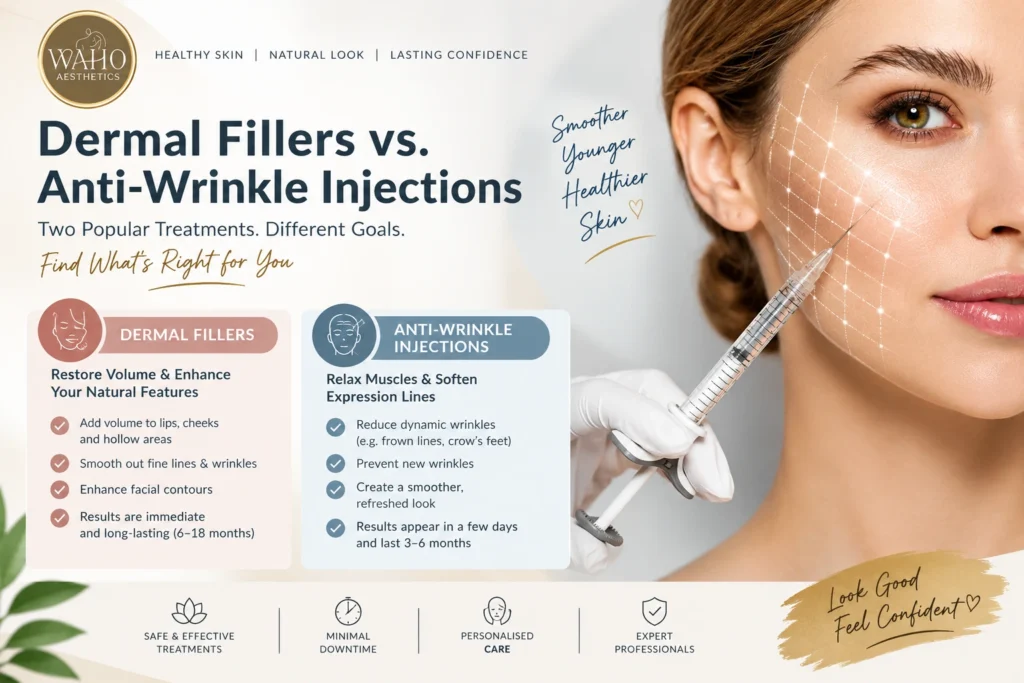
Dermal Fillers vs. Anti-Wrinkle Injections are popular treatments that help reduce the signs of ageing. However, they work in different ways. Dermal fillers add volume to the face and improve its shape. In contrast, anti-wrinkle injections help make wrinkles caused by facial movements less visible.
Therefore, knowing the difference between these treatments can help you choose the right option for your needs. At WAH Aesthetics, you can learn about different skin treatments and discuss your options with a qualified professional.
In this blog, we explain how dermal fillers and anti-wrinkle injections work, their benefits, their main differences, and what you should know before choosing a treatment.
What Are Dermal Fillers vs. Anti-Wrinkle Injections?
Dermal fillers are treatments that add volume to different areas of the face through injections. Many fillers contain hyaluronic acid, a substance found naturally in the body that helps the skin stay soft and hydrated.
As we get older, our skin loses collagen, elasticity, and volume. Because of this, we may notice deeper lines, thinner lips, or less fullness in our cheeks. Dermal fillers can help improve these concerns and make the face look fuller.
Common Uses of Dermal Fillers
A qualified practitioner may use dermal fillers to:
- Add volume to the lips.
- Make the cheeks look fuller.
- Make some facial lines less visible.
- Replace lost volume in certain areas of the face.
- Improve the shape of the face.
- Make facial features look more balanced.
However, the results depend on the type of filler, the area being treat, and the person’s face shape.
How Long Do Dermal Fillers Last?
Dermal fillers can last for several months or even more than a year. However, how long they last depends on the type of filler, the treated area, and the person’s body. Some fillers last longer than others.
However, fillers do not stop the skin from ageing naturally. Therefore, ask your practitioner how long the results may last, what side effects you might experience, and whether you may need another treatment.
What Are Anti-Wrinkle Injections?
Anti-wrinkle injections use a substance called botulinum toxin type A. This substance temporarily reduces the movement of certain facial muscles.
When we smile, frown, or raise our eyebrows, our facial muscles create lines on our skin. Over time, these lines may become deeper and more visible.
Anti-wrinkle injections relax the targeted muscles. As a result, they can make some facial lines look less noticeable.
Common Uses of Anti-Wrinkle Injections
A qualified practitioner may use anti-wrinkle injections to make these lines look less visible:
- Forehead lines: Lines that appear when you raise your eyebrows.
- Frown lines: Lines that appear between your eyebrows when you frown.
- Crow’s feet: Small lines near the outer corners of your eyes.
- Other expression lines: Other lines caused by facial movements, when suitable.
In addition, healthcare professionals use botulinum toxin to treat some medical conditions. However, not everyone can have anti-wrinkle injections for cosmetic reasons. Your health, treatment goals, and local rules can affect whether you can have this treatment.
How Long Do Anti-Wrinkle Injections Last?
You may start seeing results within a few days. However, it can take about one to two weeks to see the full results.
The results usually last around three to four months. However, the time may vary from person to person.
Therefore, follow your practitioner’s advice about follow-up visits and when you may need another treatment.
Dermal Fillers vs. Anti-Wrinkle Injections: Main Differences
Both treatments use injections, but they solve different problems. The table below explains the main differences.
Feature | Dermal Fillers | Anti-Wrinkle Injections |
Main purpose | Add volume and improve facial shape | Reduce the appearance of expression lines |
How they work | Add volume under the skin | Reduce the movement of certain muscles |
Common treatment areas | Lips, cheeks, and some facial lines | Forehead, frown lines, and crow’s feet |
Main concerns | Lost volume, facial folds, and facial shape | Wrinkles caused by repeated facial movements |
How long they last | Several months to over a year, depending on the filler | Usually around three to four months |
When results appear | Often visible straight away, but swelling may affect the first results | Results appear gradually over several days |
Main ingredient | Often hyaluronic acid or another approved filler material | Botulinum toxin type A |
Main consideration | The type of filler, where the practitioner places it, and facial shape | Muscle movement, dose, and treatment area |
As you can see, these treatments are not the same. Each one helps with different skin and facial concerns.
Which Treatment Is Better for Your Skin Dermal Fillers vs. Anti-Wrinkle Injections?
The best treatment depends on what you want to improve. Therefore, think about your main concern before choosing a treatment. You can also talk to a qualified practitioner to understand which option suits your needs.
Choose Dermal Fillers for Lost Volume
Dermal fillers may be a good option for people who want fuller lips, fuller cheeks, or less visible facial lines. They can also help improve the shape of certain areas of the face.
However, fillers do not suit every line or wrinkle. Therefore, a qualified practitioner should check your face and help you decide whether dermal fillers are right for you.
Choose Anti-Wrinkle Injections for Expression Lines
Anti-wrinkle injections may be a good option for people who want to reduce forehead lines, frown lines, or crow’s feet caused by repeated facial movements.
However, these injections do not add volume to the face. Therefore, they may not help much if you want to restore lost volume or improve the shape of your face.
Dermal Fillers vs. Anti-Wrinkle Injections Can You Use Both Treatments Together?
Yes, a qualified practitioner may recommend both treatments if you want to improve different facial concerns.
For example, you may want to reduce forehead lines and add volume to your lips or cheeks.
However, both treatments may not suit everyone. Therefore, your practitioner should check your medical history, facial structure, treatment goals, and possible risks before recommending these treatments.
Benefits of Dermal Fillers vs. Anti-Wrinkle Injections
Both treatments can provide benefits when a qualified professional chooses the right treatment and performs it correctly.
Benefits of Dermal Fillers
- Add volume: Fillers can add volume to areas of the face that have lost fullness.
- Improve facial shape: They can make the lips and cheeks look fuller.
- Treat specific areas: Practitioners can choose the areas that need treatment based on your needs.
- Offer different options: Different types of fillers can help improve different facial concerns.
Benefits of Anti-Wrinkle Injections
- Reduce expression lines: Anti-wrinkle injections can make wrinkles caused by facial movements look less noticeable.
- Target specific muscles: Practitioners can treat certain muscles instead of the whole face.
- Provide temporary results: Muscle movement slowly returns as the effects wear off.
- Require little recovery time: Many people return to their daily activities soon after treatment. However, your practitioner may give you special instructions to follow.
However, both treatments can cause side effects. Therefore, learn about the possible risks before choosing a treatment.
Risks and Safety Considerations
Dermal fillers and anti-wrinkle injections are popular beauty treatments. However, both are medical procedures. Therefore, always choose a qualified and experienced practitioner for your treatment.
Risks of Dermal Fillers
Dermal fillers may cause swelling, bruising, redness, or pain around the injection area. Sometimes, they may also cause infections, lumps, or other problems.
In rare cases, fillers can block a blood vessel. This can damage the skin and may even cause vision loss.
Therefore, seek urgent medical help if you notice severe or increasing pain, unusual skin colour changes, or vision problems after getting dermal fillers.
Risks of Anti-Wrinkle Injections
Anti-wrinkle injections may cause bruising, headaches, drooping eyelids, or muscle weakness. Some people may also notice that their face looks uneven after treatment.
Serious side effects are rare. However, seek urgent medical help if you have trouble breathing, swallowing, or speaking after the treatment.
How Can You Make Your Treatment Safer?
Follow these steps before choosing either treatment:
- Choose a qualified and experienced medical professional.
- Tell your practitioner about your health, allergies, medicines, and past treatments.
- Ask about the product, expected results, possible side effects, and aftercare.
- Avoid unqualified providers and products from untrusted sources.
- Follow your practitioner’s aftercare advice.
- Attend follow-up visits when your practitioner recommends them.
At WAH Aesthetics, you can learn about different aesthetic treatments and discuss your goals with a suitable professional before choosing a treatment.
What Should You Consider Before Choosing Dermal Fillers vs. Anti-Wrinkle Injections?
Before booking a treatment, think about what you want to improve. For example, do you want to add volume to your face, reduce wrinkles, or improve both concerns?
Next, talk to a qualified practitioner about your goals. They can check your skin, facial movements, medical history, and whether the treatment suits you.
You should also consider the cost, the need for repeat treatments, and possible side effects. In addition, do not choose a treatment only because it is cheaper or popular on social media.
Remember, choosing the right treatment, using the correct technique, and having realistic expectations can help you make a better decision. However, no injectable treatment can stop ageing or guarantee specific results.
Conclusion: Dermal Fillers vs. Anti-Wrinkle Injections
Dermal fillers and anti-wrinkle injections help reduce different signs of ageing. Dermal fillers add volume to the face and improve its shape. In contrast, anti-wrinkle injections help make lines caused by facial movements less visible.
Therefore, the best treatment depends on your skin concerns, health, and personal goals. A qualified practitioner can help you choose one treatment or both, depending on your needs.
If you want to learn more about aesthetic treatments, WAH Aesthetics can help you explore your options. Always talk to a qualified practitioner before choosing a treatment.
What is the main difference between dermal fillers and anti-wrinkle injections?
Dermal fillers add volume to certain areas of the face. In contrast, anti-wrinkle injections relax specific facial muscles to make expression lines less visible.
Do dermal fillers last longer than anti-wrinkle injections?
Dermal fillers can last for several months or more than a year, depending on the type of filler and the treated area. In comparison, anti-wrinkle injections usually last around three to four months. However, results may vary from person to person.
Are dermal fillers and anti-wrinkle injections the same?
No, these are two different treatments. Dermal fillers add volume to the face, while anti-wrinkle injections relax certain facial muscles to make wrinkles less visible. Each treatment helps improve different facial concerns.
Can you have dermal fillers and anti-wrinkle injections together?
Yes, a qualified practitioner may recommend both treatments if they suit your needs. However, your health, facial shape, treatment goals, and possible risks will help the practitioner decide whether both treatments are right for you.
How do I choose between dermal fillers and anti-wrinkle injections?
First, think about what you want to improve. If you want to add volume to your face, dermal fillers may be a good option. However, if you want to reduce wrinkles caused by facial movements, anti-wrinkle injections may suit you better. A qualified practitioner can help you choose the right treatment for your needs.